by atmara | Nov 7, 2011 | Art, Mandala Monday, Mandalas
Stonehenge in England is one of the first places that many people think of when stone circles as mandalas are mentioned. However, there are ancient remnants to be found around the world that have been left behind by civilizations long ago. These types of intriguing mandalas remain mysteries that will forever invoke curiosity and the desire for answers. Why and how were they built and what exactly were they used for?
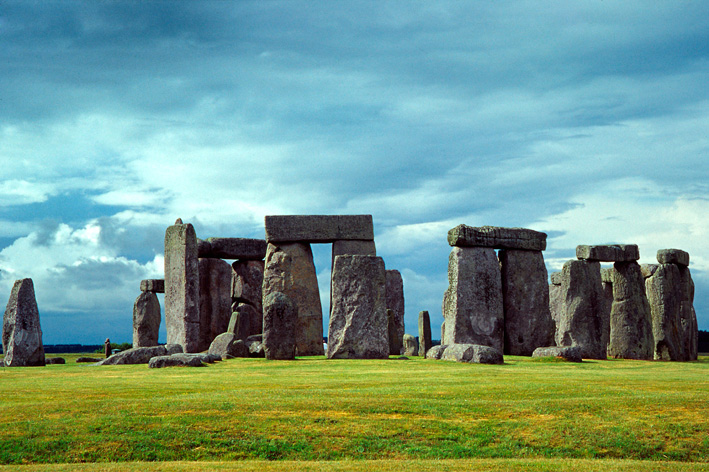
Stonehenge
Although the meaning of many stone circles in mandalas have been determined, there are an abundance that will remain a mystery forever. Similar to the Tibetan mandala where stones are used to reach true enlightenment, it is believed that most of these ancient discovered stone mandalas were once used for religious ceremonies. Sanskrit for circle, the center of a mandala houses the gods, which enjoin the circle to help complete one’s journey to their personal center to become one with the universe.
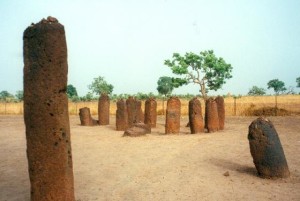
Wassu Stone Circles-The Gambia
Depending on the creator’s design and the forces that were instilled, some stone circles offer a life energy held within them all on their own. The person using the mandala is connected through their subconscious mind to the universal spirit. In this case, each individual stone has been placed precisely to work together as a circuit. If one stone is removed, it could affect the circuit adversely.
Placing stones in this type of pattern is considered to be a meditative activity. For the individual to reach total enlightenment, visualization, air and thought all play their roles in enhancing the experience.
The United Kingdom is famous for their collection of stone circles as mandalas. Aside from Stonehenge, in County Cork, Ireland you will find Dromberg, Beltany’s Circle is located in County Donegal, Ireland, Carl Llechart is in Wales and in Scotland you will find the Ring of Brodgar. Each one of these were used for ceremonial purposes, many were even solar calenders that were used to mark the solstice and equinox, boasting stones in specific areas to track heavenly bodies.
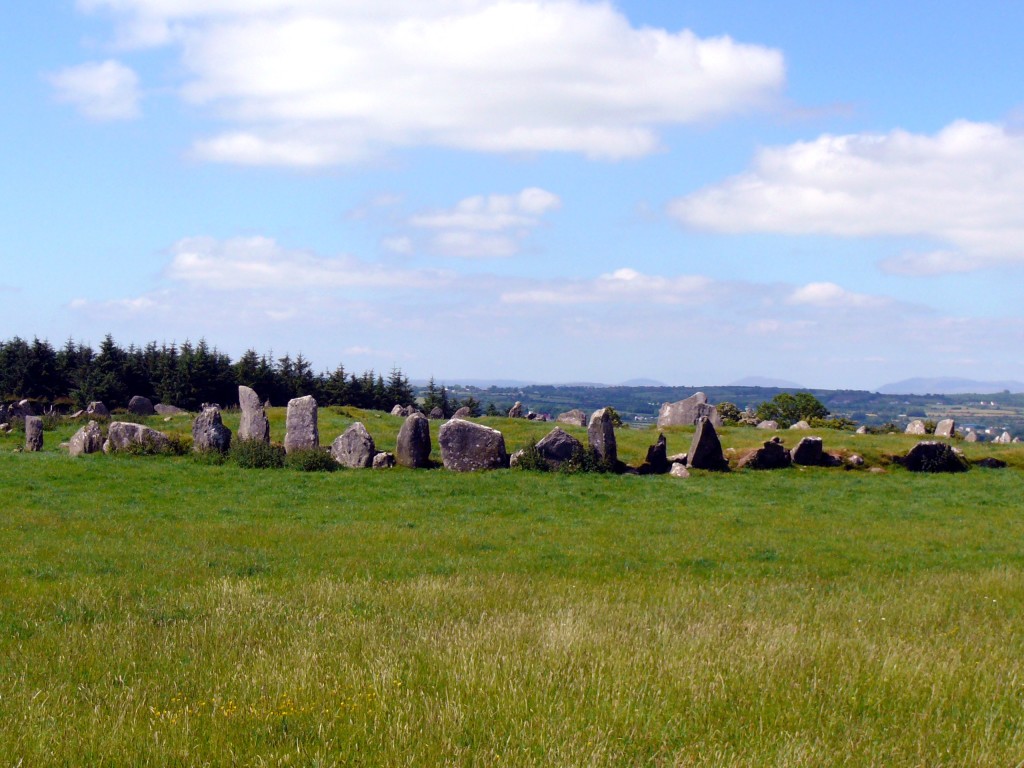
Beltany’s Circle
Covering 28 acres with a diameter of over 1,000 feet, Avebury is the world’s largest stone circle. There are two smaller circles found within and once the stones, harvested from Marlborough Downs, stood 55 feet high. The annual Beltane Festival inspire the name of Beltany while Dromberg is known as the Druid’s Alter, from Ireland’s old religion. It is also interesting to note that Temple of the Sun was the original name for the Ring of Brodgar.
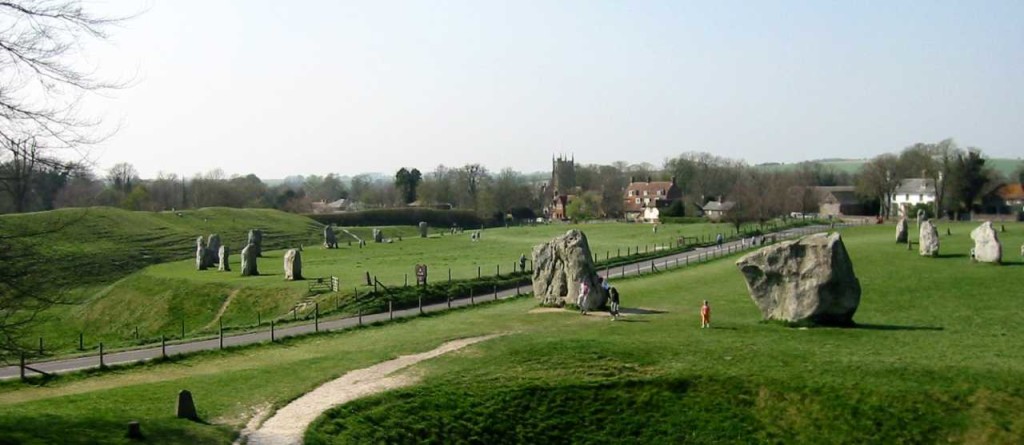
Avery Stone Circle
These stone circles are similar to all mandalas. As one would journey to the center from the outer ring, there were statues where the pilgrims would stop to make time for meditation to become closer to their gods.
Interestingly, the sky, fire and death were once associated with stone circles in France. Archaic astronomers would even use constellations, solstice and equinox to hone out their years. Also, the needs of the region’s inhabitants would affect which gods were worshiped in these mandalas.
Rujm Hari in Israel, constructed of basalt is a prime example. There are five concentric circles found here that are considered to be a message dated back to the beginning of creation. This location is spoke of in Deuteronomy, Joshua and Genesis in Torah and the Bible. This is just one of the many stone circles found in the Middle East.
There are also stone circles as mandalas found in America and Canada, a popular one being the Medicine Wheel found at Big Horn. Many religious rituals and ceremonial dances took place here. It is also suggested that it was used as part of a journey for pilgrims to get closer to the center gods.
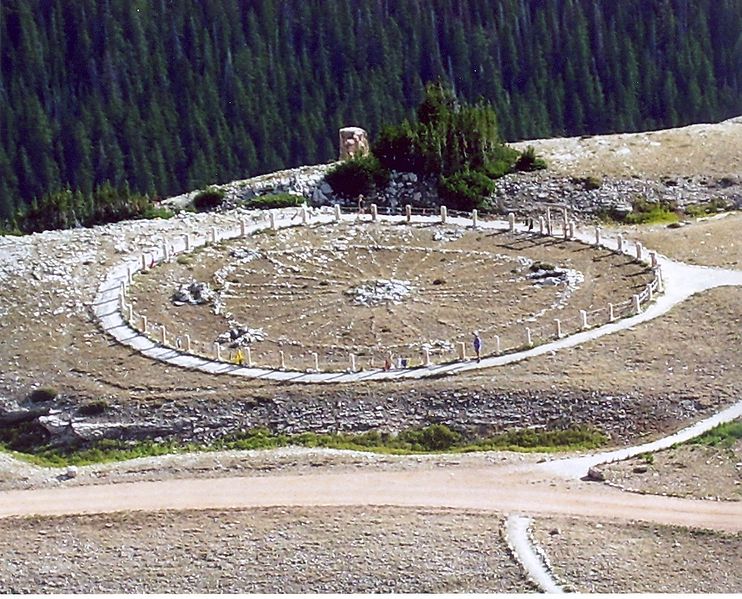
From prehistoric dwellers to today, stone circles as mandalas have been created around the world. Stone circles, cairns and mandalas are all used to reach enlightenment to offer gods the lives of pilgrims, thanking them for their existence on Earth.
Article by Epouna
www.meaningofmandalas.com
Images from Wikimedia Commons
——————————————————————————————————–
I look forward to your thoughts and comments!
Be sure to Subscribe to this blog either by RSS or Email via the forms on the top right column of the page.
Like this:
Like Loading...
by atmara | Oct 31, 2011 | Art, Mandala Monday, Mandalas, Meditation
Meditation has been used since ancient times to reduce stress, find one’s center, calm the mind and soothe the soul. Contrary to what you may think, not all meditation is spiritual, just as many individuals use it for personal use. Regardless of your reasoning or goals you hope to achieve, your personal journey can be significantly enhanced by using a mandala.
Sanskrit, for the English word circle, the mandala has been introduced to the population through Buddhist and Hindu religions. When you choose a mandala for meditation purposes, it is important to be aware that each one is very different. They offer their individual symbolism and quite often, a deity is housed in the center.
When you gaze at a mandala during meditation and follow one point to another your mind and body naturally become intertwined. When you are able to become one with the mandala, you have entered into a quasi state as you are captivated by the mandala’s design.
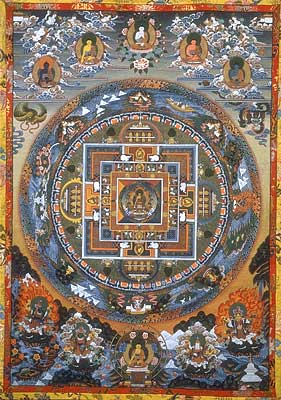
Choosing the right mandala is imperative for your journey. Although Tibetan Monks sweep their sand mandalas up and take them to a nearby body of water so they can finalize their circle of life, your actions don’t need to be as extreme to be effective. In fact, there are coloring pages which are available online that can be downloaded or you can simply draw your own if you’re feeling creative.
(See the post, 10 Links to Free Mandala Coloring Pages for sources of coloring images)
If you want a more traditional mandala, you will find them primarily made from silk, thangka or sand but contemporary versions are available in the form of photographs, paintings, fiber arts and even sculptures.
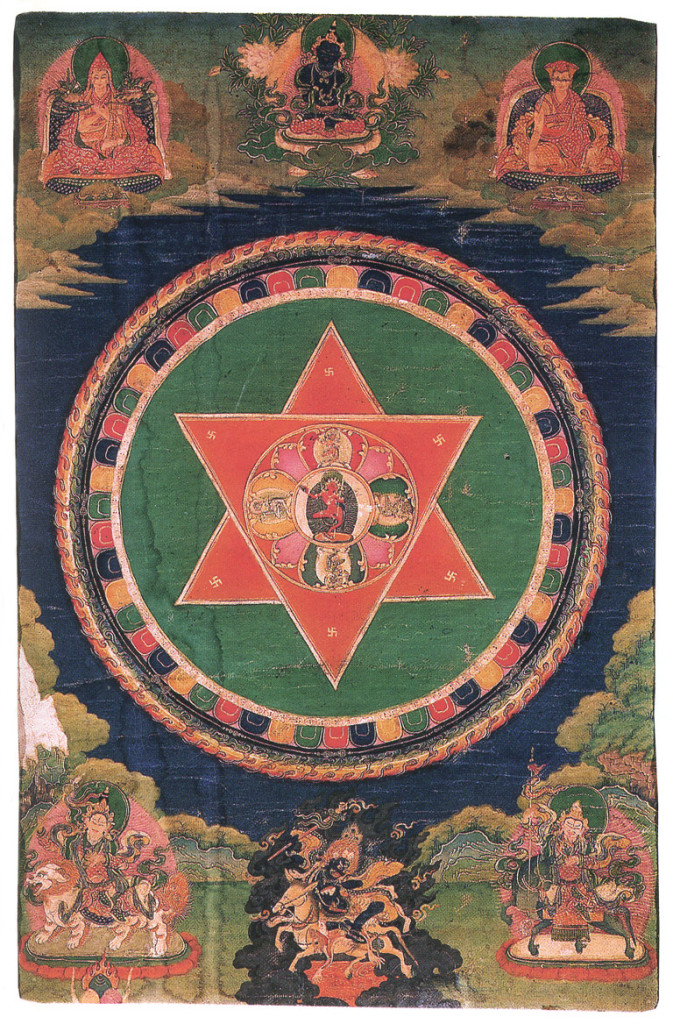
When you prepare to meditate, it is important that you are able to find yourself in a comfortable position, somewhere quiet where you won’t be interrupted with your mandala placed across from you at eye level. Some find it helpful to create an altar for their mandala, adding objects that are symbolic of peace, grace, purity and spirituality.
When you begin to meditate, you will start at the entry point which is always the mandala’s outer ring. According to Tibetan tradition, it is this part of the mandala that essentially purifies you so that you are able to continue on with your journey. As you concentrate on the various colors, shapes and lines, the path gradually leads you toward the center. Quite often, you will reach a dead end on your journey, this is to be expected. A mandala takes you on a path to enlightenment so there are times you need to reverse your path to get closer to the center.
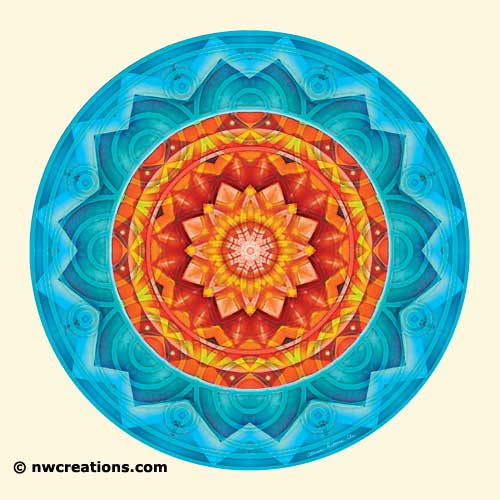
Mandalas of Deep Trust, No. 8
© Atmara Rebecca Cloe
As you make your journey inhale and exhale slowly through the nose, concentrating on your body’s rhythm. You will find that as you become one with the wisdom of the universe, your body’s rhythm will begin to match the design of the mandala.
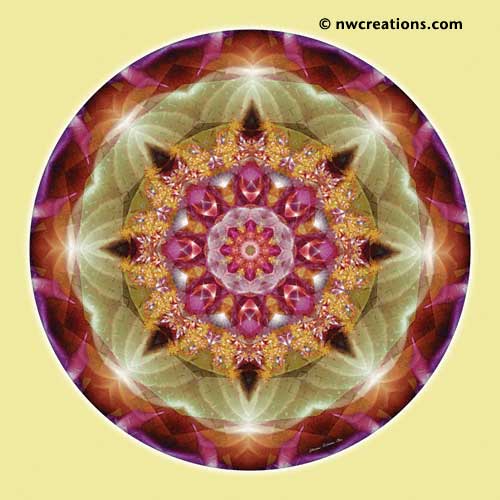
Mandalas from the Heart of Peace, No. 1
© Atmara Rebecca Cloe
It is recommended to partake on this journey to enlightenment for anywhere between 15 to 30 minutes. You will likely feel energized as well as quite surprised at just how powerful this sacred object actually is. As you release the stresses of the outside world, you will become quiet, calm, still and tranquil.
Article by Epouna
www.meaningofmandalas.com
Images from Wikimedia Commons and Atmara Rebecca Cloe
See all of Atmara’s Mandalas at Zazzle.com
——————————————————————————————————–
I look forward to your thoughts and comments!
Be sure to Subscribe to this blog either by RSS or Email via the forms on the top right column of the page.
Like this:
Like Loading...
by atmara | Oct 24, 2011 | Art, Mandala Monday, Mandalas
When one thinks of Ireland, it is very easy to automatically visualize highly recognizable symbols of the country such as Celtic crosses, harps and claddagh. Traveling through the rolling green hills, you will find ruins and Celtic crosses still standing from early centuries which remain a mystery to all. Who created them and how have they manged to exist through the years while others have been destroyed?
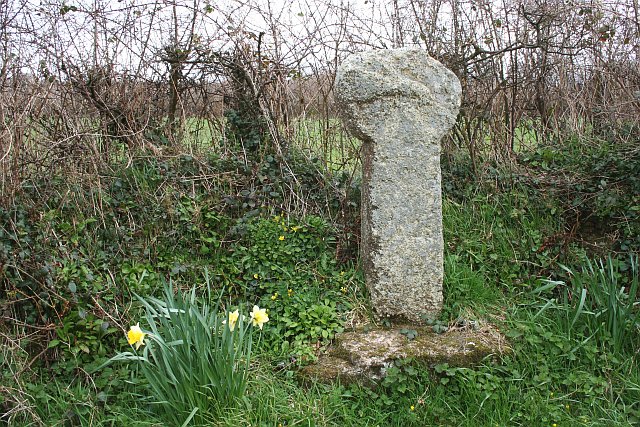
© Tony Atkins
Although many people assume that original Celtic crosses from the 12th century were created and used as grave markers, this is absolutely false. They were actually first used as boundary markers such as at an intersection between two parishes or to separate properties. It wasn’t until they began being created again with an explosion in popularity in the 19th century that Celtic crosses found themselves used as gravestones.
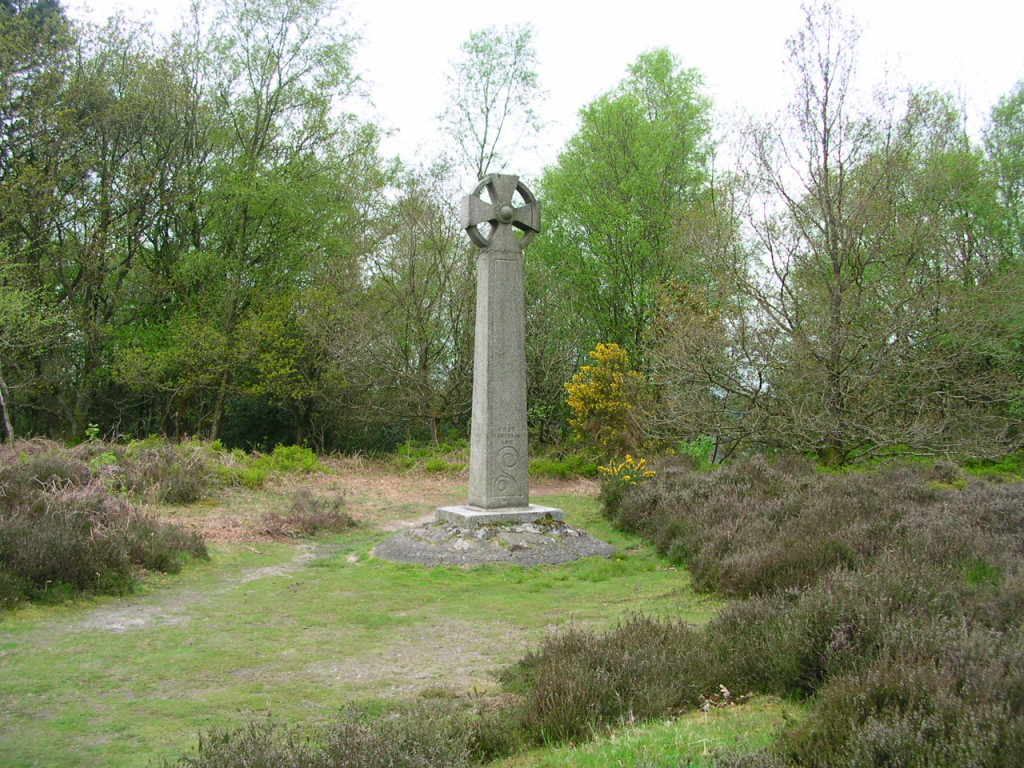
Celtic crosses of the old were created with extremely intricate designs that offered quite symbolic meanings. The cross and base, capstone, intersection and ring make up the four major components of this High Cross. They were often created from stone slabs that had been previously used for something else with its own bit of history. While some have not held up well through time, it is typically those made from granite and sandstone that are still standing.
The base was created from stone while the ring encompasses the cross itself. The horizontal areas of the cross are considered to be associated with the earthly world while the vertical axis pointing upward toward the sky is affiliated with the heavenly world.
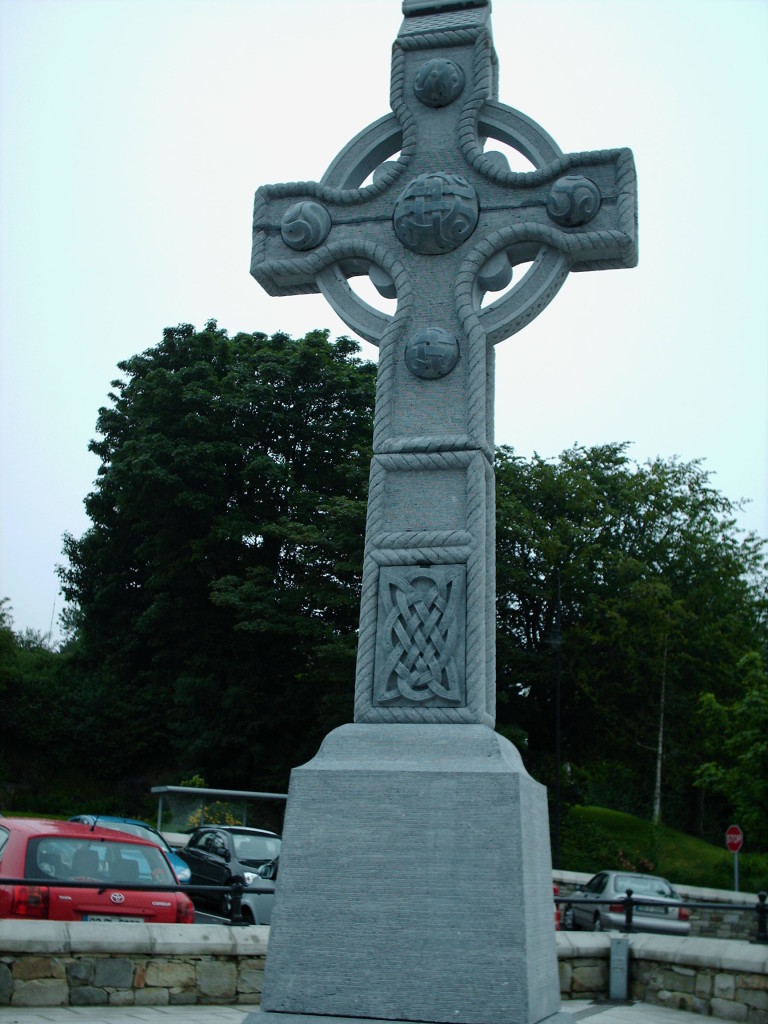
While many people believe that Christianity was responsible for the birth of the Celtic cross, this guardian symbol actually predates this time period. Credit of the birthright is suggested to be given to the Druids and other ancient religions. However, there is still confusion as to how the circle was added to the cross. A legend of Saint Patrick suggests that when he brought in Christendom to Ireland and wiped the snakes from the country, he added the circle himself.
It is said that Saint Patrick wanted to combine Christianity with the sun or moon using the circle that was once used in ancient religion. This was meant to ensure that Ireland’s inhabitants would remain focused on the new religion.
Another idea is that the circle on the cross is a representation of the Chi Rho or Crown of Thorns that was worn by Christ while others believe that it is directly linked with the sun wheel associated with pagan rites.
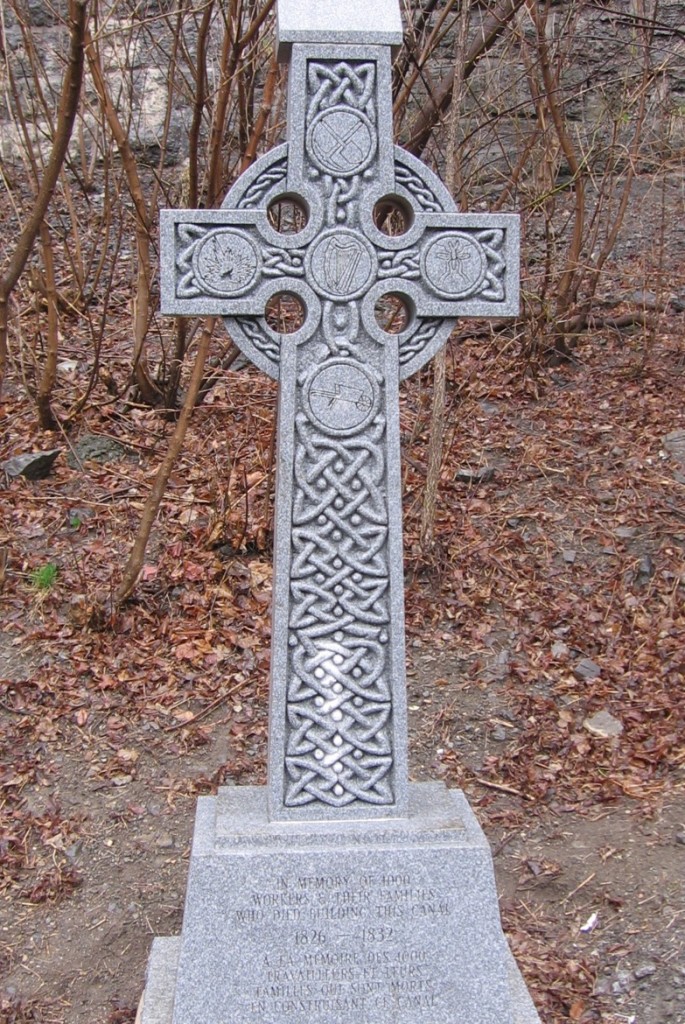
When viewing a Celtic cross, you will observe that Biblical scenes are represented in the panels. Stories from the New and Old Testament are depicted on opposing sides of the cross while the Celtic knot that you find on many ancient crosses symbolize major events or stories that have taken place. Some Celtic crosses also have spirals, animals and even key patterns. The Tree of Life is a prime example of this.
If you are looking to view some of the early Celtic crosses in Ireland, you can find them in several counties including Clare, Kildare, Wicklow, Tipperary, Offaly, Meath, Louth and Tyrone. Regardless of how the initial design came to be, Celtic crosses symbolize eternal life.
Article by Epouna
www.meaningofmandalas.com
Images from Wikimedia Commons
——————————————————————————————————–
I look forward to your thoughts and comments!
Be sure to Subscribe to this blog either by RSS or Email via the forms on the top right column of the page.
Like this:
Like Loading...