by atmara | Dec 19, 2011 | Art, Inspiration, Love, Mandala Monday, Mandalas
May You be Blessed to Know the Joy that You Truly Are.
Holiday Greetings from Atmara Rebecca Cloe
and Living the Heart’s Desire

Image © Atmara Rebecca Cloe
——————————————————————————————————-
I look forward to your thoughts and comments!
Be sure to Subscribe to this blog either by RSS or Email via the forms on the top right column of the page.
Like this:
Like Loading...
by atmara | Oct 31, 2011 | Art, Mandala Monday, Mandalas, Meditation
Meditation has been used since ancient times to reduce stress, find one’s center, calm the mind and soothe the soul. Contrary to what you may think, not all meditation is spiritual, just as many individuals use it for personal use. Regardless of your reasoning or goals you hope to achieve, your personal journey can be significantly enhanced by using a mandala.
Sanskrit, for the English word circle, the mandala has been introduced to the population through Buddhist and Hindu religions. When you choose a mandala for meditation purposes, it is important to be aware that each one is very different. They offer their individual symbolism and quite often, a deity is housed in the center.
When you gaze at a mandala during meditation and follow one point to another your mind and body naturally become intertwined. When you are able to become one with the mandala, you have entered into a quasi state as you are captivated by the mandala’s design.
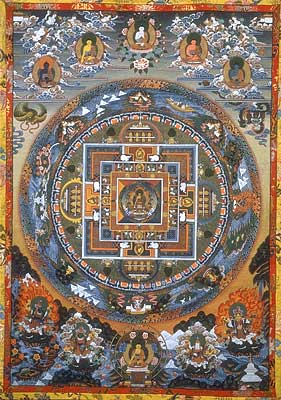
Choosing the right mandala is imperative for your journey. Although Tibetan Monks sweep their sand mandalas up and take them to a nearby body of water so they can finalize their circle of life, your actions don’t need to be as extreme to be effective. In fact, there are coloring pages which are available online that can be downloaded or you can simply draw your own if you’re feeling creative.
(See the post, 10 Links to Free Mandala Coloring Pages for sources of coloring images)
If you want a more traditional mandala, you will find them primarily made from silk, thangka or sand but contemporary versions are available in the form of photographs, paintings, fiber arts and even sculptures.
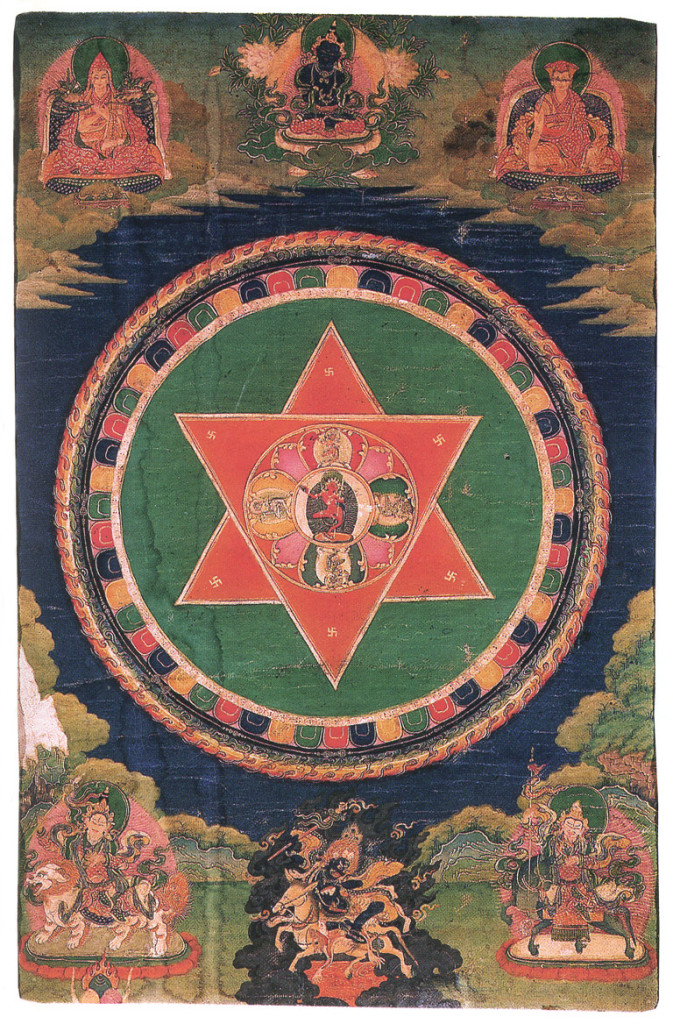
When you prepare to meditate, it is important that you are able to find yourself in a comfortable position, somewhere quiet where you won’t be interrupted with your mandala placed across from you at eye level. Some find it helpful to create an altar for their mandala, adding objects that are symbolic of peace, grace, purity and spirituality.
When you begin to meditate, you will start at the entry point which is always the mandala’s outer ring. According to Tibetan tradition, it is this part of the mandala that essentially purifies you so that you are able to continue on with your journey. As you concentrate on the various colors, shapes and lines, the path gradually leads you toward the center. Quite often, you will reach a dead end on your journey, this is to be expected. A mandala takes you on a path to enlightenment so there are times you need to reverse your path to get closer to the center.
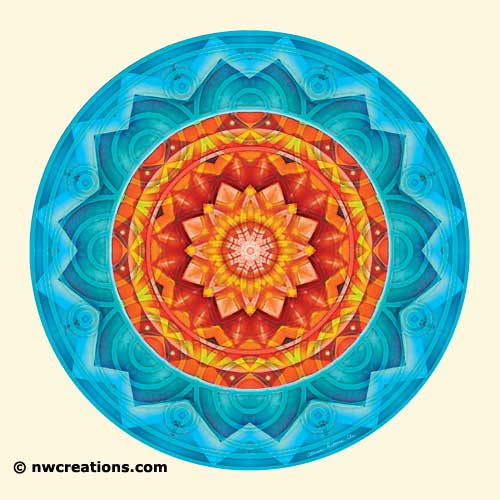
Mandalas of Deep Trust, No. 8
© Atmara Rebecca Cloe
As you make your journey inhale and exhale slowly through the nose, concentrating on your body’s rhythm. You will find that as you become one with the wisdom of the universe, your body’s rhythm will begin to match the design of the mandala.
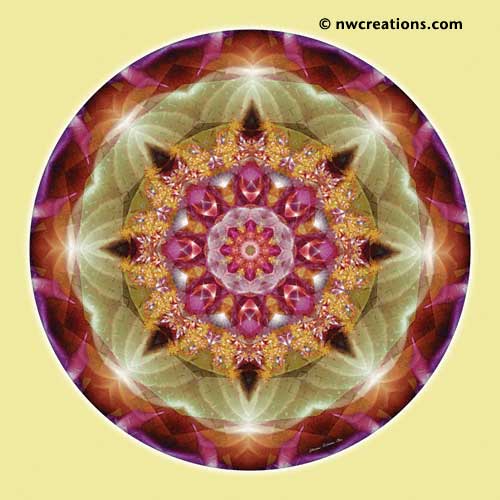
Mandalas from the Heart of Peace, No. 1
© Atmara Rebecca Cloe
It is recommended to partake on this journey to enlightenment for anywhere between 15 to 30 minutes. You will likely feel energized as well as quite surprised at just how powerful this sacred object actually is. As you release the stresses of the outside world, you will become quiet, calm, still and tranquil.
Article by Epouna
www.meaningofmandalas.com
Images from Wikimedia Commons and Atmara Rebecca Cloe
See all of Atmara’s Mandalas at Zazzle.com
——————————————————————————————————–
I look forward to your thoughts and comments!
Be sure to Subscribe to this blog either by RSS or Email via the forms on the top right column of the page.
Like this:
Like Loading...
by atmara | Sep 19, 2011 | Art, Healing, Mandala Monday, Mandalas
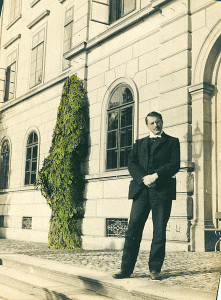 While you may be familiar with Freud who believed the force behind psychological things was sexual, Carl G. Jung shared this generation but had beliefs of his own. Jung (1875-1961), was a psychologist and psychiatrist who found that personalities of both the conscious and unconscious mind were formed by symbolic archetypes living within. It was these archetypes that ultimately gave birth to mankind.
If you are familiar with Jung’s philosophies, you know that he is deemed responsible for extrovert and introvert personality classifications including think, feel, sensation and intuition. Jung suggested the balance between conscious and unconscious minds was essential for the well-being of one’s soul. All humans hold collective or global consciousness which are inherited through the generations from the beginning. In the Jungian world, archetypes are essentially personality templates.
When in your dream state, primordial images are offered through thought may vary depending on your culture. Just as a bird creates a nest, instinctive ways, based on senses, are portrayed in choices made in everyday life. Symbolic images which have been represented in ancient art in every culture reflect universal myths of creation, god-man relationships and endless other legends. These are all considered Jungian archetypes as well.
It is common that those you draw into your life have similar idealist tendencies as you. Regardless of culture, throughout mythology, three constants have been animals, circles and stones as these are elements of the collective consciousness. Animals are spiritual guides and power figures to Native Americans, Romans and even Americans as the eagle is the country’s symbol. Buddhist and Hindu traditions hold circles sacred such as the mandala and stones have symbolized a variety of occurrences. Stonehenge is an example, very symbolic to ancient Baltic people or you can evaluate Jacob’s actions in the Jewish Tradition. When God spoke to Jacob, he laid a circle of stones in his dream. Human instincts are depicted in all of these cases.
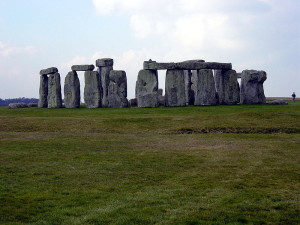
Stonehenge
Mandalas were viewed as basic patterns for the fantasy life and dream state to Carl Jung. They represent eternal creation, eternal mind, formation and transformation. Jung discovered that while you walk among the mandala’s outer circle, it is the center that holds you captive to reach a harmonious balance with the universe. The deity lives in the mandala’s center. As you mentally create your own mandala, various images are generated causing a biochemical reactor in your consciousness to end suffering while achieving enlightenment.
The renowned Mandala of Two Realms is created through the combination of Five Buddhas and the Five Kings. Native American mandalas offer good health, joy and prosperity while a Jungian Mandala draws you into your center by following the symbols within its consciousness.
The Jungian Mandala offers lost knowledge of:
1. As your soul grows form one initial form to another from infancy to manhood, hero myths play key roles in your journey.
2. Quaternity (four-part) is essentially one’s symbol of wholeness.
3. You are able to grow to a higher level of understanding as you hear your unconscious from self-realization that has fed individualization.
4. Your persona is your mask that allows you to show the world what you are good at.
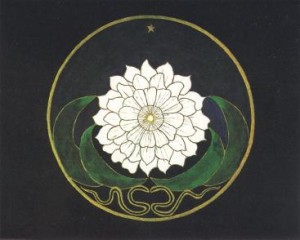
Mandala made by a Jung’s unknown patient before 1929
Carl Jung is known for this depth and understanding of mankind’s conscious and unconscious minds. He realized that there is a bond within that can never be broken. Religions, rituals and ceremonies parallel your birth, existence and death. Just as your life creates one big symbol, it is this symbol that you pass onto the next to live again.
Article by Epouna
www.meaningofmandalas.com
Images from Wikimedia Commons
——————————————————————————————————–
I look forward to your thoughts and comments!
Be sure to Subscribe to this blog either by RSS or Email via the forms on the top right column of the page.
Like this:
Like Loading...