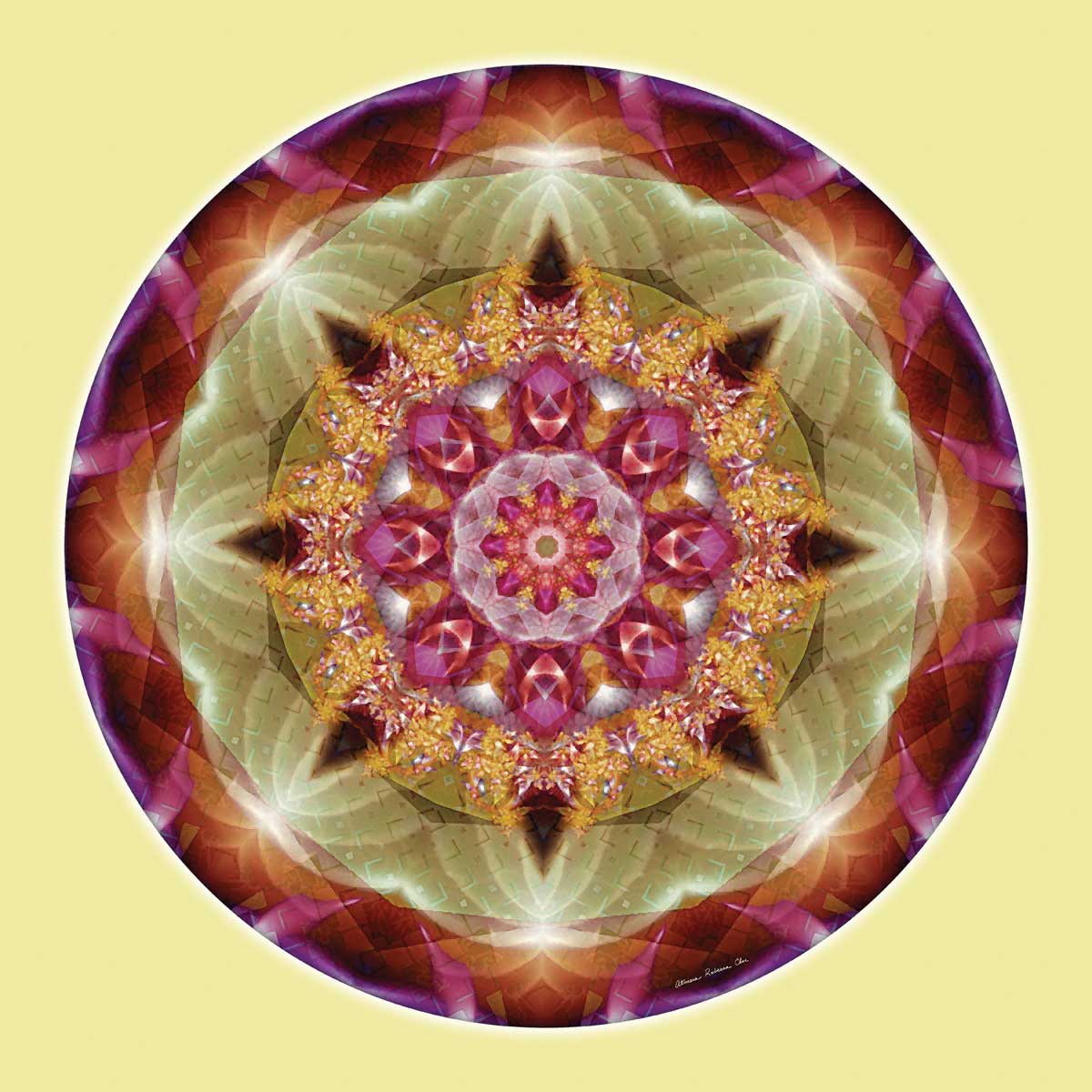
by atmara | Aug 22, 2011 | Art, Mandala Monday, Mandalas, Sacred Geometry
Labyrinths, just like mandalas, have been used by people around the world to find one’s center through a spiritual journey. Although the oldest labyrinth that has been found to date is in Crete, this type of Sacred Geometry has been a longtime part of cultures such as America’s Hopi Tribes and Australian Aboriginal natives. Designs such as these have also been found in European cathedrals and even as a rock etching in England.
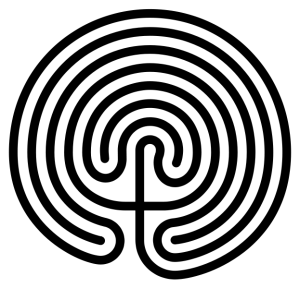
Although many people assume that all labyrinth are mazes, they’re not. Mazes are a part of the labyrinth family but labyrinths don’t offer any obstructions the way that mazes do. This means that you always have a clear path to the center without having to backtrack your journey.
Labyrinths have quite a long history. In fact, the clay tablet found in Greece, inspired the Classical Labyrinth and it dates back all the way to 1,200 BCE. If you have ever been in a European church, you may have found a Medieval Labyrinth on the floor. This variety is constructed with Sacred Geometry and offers four symbolic quadrants.
As you follow the circle inward, the labyrinth helps you find your own center. You will notice that the closer that you get to the center of the labyrinth, there are certain energies that become prevalent. As you journey to discover your relationship with your gods, the Earth and the universe, egos are pushed aside as you enter deeper into a meditative state.
Every labyrinth journey is different for each individual. There are no right or wrong rituals. The Journey of Life is a common ritual that takes on a journey to find your destiny once you arrive at the center. During this ritual you must pay attention to sounds and sights around you and envision your goals. As you make one turn after the other, some parts may be more difficult as they represent turning points and struggles in your personal life.
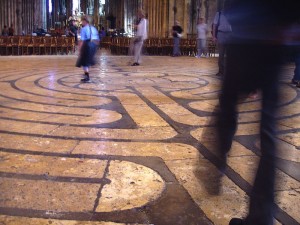
The Three Fold Path ritual is a Christian example. You signify Purgation as you release your inhibitions walking through the labyrinth. Insight and clarity are gained when you reach the center which signifies illumination. The path out is just as important as the journey in, this is where you use the insight that has been received to send into the world which represents Union.
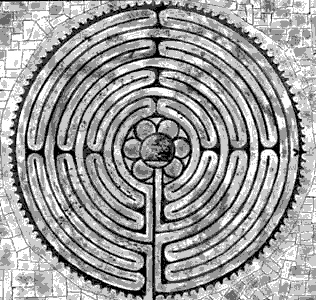
Chartres Cathedral in France offers one of the world’s most famous labyrinths, for hundreds of years, pilgrims made the long journey here. Total enlightenment through God is achieved by using this prayer tool. Similar to a mandala, labyrinths can be used in many ways. Dance, crawl or pray silently along your journey, it doesn’t matter as long as it helps you reach your center.
A cross formation represents the eleven circuits which has four quadrants and a rosette center. This symbolizes the four regions. The cross where Christ died is a representation of this type of symbolic Sacred Geometry.
The Divine which you are trying to better understand or worship becomes more accessible to you as you open your soul, heart and mind by using labyrinths as mandalas. Meditation helps you achieve a clean slate and cleanses you inside as it brings you near the Divine. Along your journey, pray, meditate and think and once you reach the center, you will realize who you are and what your future holds.
Article by Epouna
www.meaningofmandalas.com
Images from Wikimedia Commons
——————————————————————————————————–
I look forward to your thoughts and comments!
Be sure to Subscribe to this blog either by RSS or Email via the forms on the top right column of the page.
by atmara | Aug 15, 2011 | Art, Mandala Monday, Mandalas
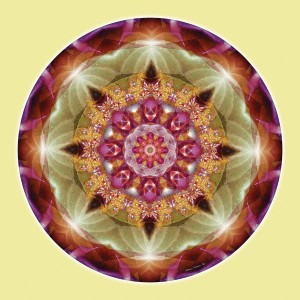
Mandalas from the Heart of Peace 2 © Atmara Rebecca Cloe
Sanskrit for circle, mandalas have been used since ancient times to help individuals reach enlightenment and an overall sense of completeness. Cultures around the world have used mandalas for religious purposes and they have long been beneficial as a meditation and healing tool. Of course, it only makes sense that mandalas be used as a form of art therapy as well.
Although you may not realize it, mandalas are all around you from elements as small as atoms to large masses like the sun. Mandalas can be represented in literally every circle that has a center.
When used as art therapy, the therapeutic journey of finding one’s center is in the actual creation of the piece, not in the final product as you might expect. Colors and shapes are symbolic to the artist and only the artist can truly understand them. In essence, the creator is represented in the mandala itself. Any feelings, emotions and thoughts that are experienced by the artist along this journey are brought to life in the mandala as it’s being completed.
When mandalas are used in art therapy, the patient always chooses their medium because this is the initial step in their journey. There are no right or wrong choices. It doesn’t matter if paper, canvas, poster board or cardboard is used with water colors, oils, acrylics, markers, pastels or colored pencils, they can all equally be as symbolic as the next.
While the patient is creating their mandala, they should write down the colors that they use as well as how they were feeling or what they were thinking about when they used each color. Soft and hard lines as well as various shapes and images are all symbolic as well. Mandalas never have coincidences or accidents, everything is created for a reason.
The circular center is the most important aspect of a mandala and the only part that you really need to be concerned with during the creation of the piece. When mandalas are used in various cultures and religions, the center is where deities reside. It is important that during the creation of a mandala, you radiate outward from the center, for this is where the heart and soul are construed.
It is essential that while you take your therapeutic mandala journey that you never lose site of yourself, where you have come from and where you hope to arrive. Take the time to enjoy the process and appreciate what you are creating.
There are many benefits to be received by the patient who is using a mandala as art therapy. Their mood will be enhanced to a more positive state, self-improvement levels will rise and there is a significant increase in self-awareness.
Breathing, heart rate and blood pressure become significantly slower as the patient gradually becomes more entranced in their mandala creation journey and they become one with the piece to arrive at their center. Mandalas also offer mental stimulation which is always beneficial for any person, patient or not.
As spiritual transformation and wholeness take over, healing is permitted to take place. This is why mandalas have been used as a beneficial form for therapy since ancient times.
Article by Epouna
www.meaningofmandalas.com
——————————————————————————————————–
I look forward to your thoughts and comments!
Be sure to Subscribe to this blog either by RSS or Email via the forms on the top right column of the page.
by atmara | Aug 8, 2011 | Art, Mandala Monday, Mandalas
Used in many cultures throughout history, mandalas represent one’s personal life journey. Sanskrit for circle, these pieces offer a center for cultural gods, to help guide the user on a path to reach total enlightenment. However, contrary to what many people believe, mandalas are not only used in religion, they are appreciated in nearly every aspect of nature as well.
One can actually view mandalas pretty much everywhere in nature. In trees, plants, vegetables, fruits and animals, any circumstance that allows you to enjoy circles that encompass other patterns provide a mandala to enjoy.
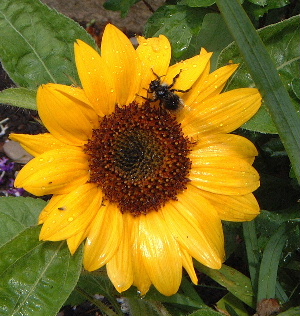
A prime example is the beautiful symmetry offered by a flower. Sunflowers have seedy centers with vibrant petals that radiate outward while the petals of an elegant rose gently fold over one another. This brings new meaning to the taking time to smell the flowers! There are many things in nature to enjoy when one pauses long enough to explore it.
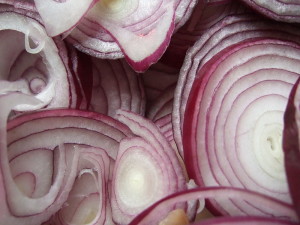
Vegetables are another great example! Sure, you may not relish the thought of slicing an onion but if you take a moment to enjoy the endless supply of circles it offers, you may find yourself cooking with them more often. Other natural mandalas can be observed in brussel sprouts, lettuce and tomatoes. Have you ever taken the time to examine an orange as you peel it? What about a kiwi or a grapefruit? They all offer mandalas.
Want to observe some truly remarkable natural mandalas? Take a stroll through a forest! Tree trunks of any size and every age radiate outward from the center to symbolize the tree’s life cycle. Observe a few pine cones that have fallen on the forest’s floor, notice how the layers flow perfectly from one to another? Turn over a simple wild mushroom and enjoy the mandala that is created around the stem.
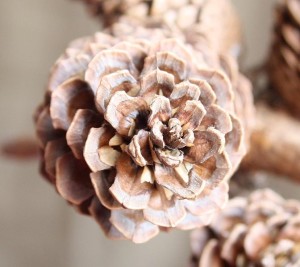
Pratheep P S, www.pratheep.com
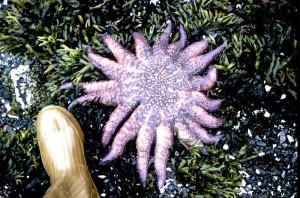
A large variety of wildlife and sea life offer exceptional examples of mandalas in nature too. The intoxicating design of zebras and tigers are easy examples that most people would recognize but jellyfish, starfish and octopus are great ones as well. A fantastic example of sacred geometry can be seen looking at a killdeer’s eggs as they are often arranged in the nest with the smaller end positioned toward the center.
Nearly everywhere you look around the planet, you are presented with endless possibilities of natural mandalas. There are a never-ending supply of landscapes that capture mandalic geometry, offering energy and spirit. Grand Prismatic Spring boasts eye-catching colors, the Olympic Peninsula houses gorgeous rock formations and a three-dimensional mandala is granted when you explore the Tufa Towers found in the Mono Lake of California.
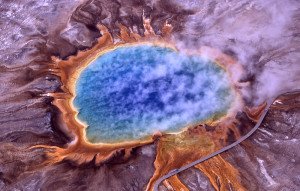
Grand Prismatic Spring
If you take the time to enjoy every part of nature, you will realize that mandalas are offered as gifts literally all around you. Each one provides its own journey that can help provide a quite meditative moment, allowing you to become one with the planet that offers you such captivating pieces of art. When you do recognize a mandala, you can then use it on your journey to find your center.
Article by Epouna
www.meaningofmandalas.com
Images from Wikimedia Commons
——————————————————————————————————–
I look forward to your thoughts and comments!
Be sure to Subscribe to this blog either by RSS or Email via the forms on the top right column of the page.