
Mandala Monday – Indians Use Art Therapy to Reduce Anger by Paulo Boranti

Author: Paulo Boranti

Like the rest of the global village, Indians also experience anger, that raw, powerful emotion that seems to take over our lives, consuming our thoughts.

Indian people use an art therapy technique, drawing ‘mandalas’, to help calm and express their rage in a careful and controlled way.

Mandala, is the Sanskrit word for ‘circle’. Within this circle the Indians say there are no rules, a space in which you alone exist. A place where you can let your feelings come out as a swirl of colours and lines.

The Times of India recently featured an article on how this process works.

How Mandalas Work

Participants find that once they finish drawing an angry mandala, they are tempted to draw a new, happy one, since their anger has been released through artistic expression. If you suffer from anger management issues, perhaps you should give it a try.

Participants like Manju Mohinani says:

“You get lost with the colors and the movement of your hands and thus you express yourself clearly without even realizing it. The best part is that when you do mandalas you are not thinking, you get so lost in the drawing. You don’t feel that you are working on yourself, its so easy and so much fun.’

Manju is a real advocate of drawing mandalas – it’s the way she as dealt with her anger for years, stating that she just takes out paper and crayons and lets go. Once the drawing is complete, she feel at peace with herself again.

Manju Mohinani

Manju Mohinani

Drawing Materials is All That’s Needed

Drawing a mandala is very simple. All you need is a sheet of paper and a box of crayons or coloured pencils, the kind used in schools by children is fine. Mandalas are not an art, so you do not need to worry about how they look or whether you are doing them right or wrong. You’re not trying to create a masterpiece, the point of the drawing is to express how you feel.

Manju says:

‘to sketch an anger mandala , just sit and feel your anger. When you feel, it clearly takes up the colour that fits the best. Then draw a circle on the paper and let the feelings emerge on their own. Let them get expressed inside the circle, using whatever lines or colors that come. Don’t censor yourself and don’t think, just let go.’

Participants find drawing mandalas is something that is easy to do, and is a novel way of revealing your true feelings, break down some boundaries and show that you are in control. And of course, if you are in control, you can take steps to solve the problem that was causing the anger.

The Benefits of Drawing Mandalas and What They Might Mean

The primary reason for drawing a mandala is to be an outlet for anger, but sometimes people see a certain significance in what they have drawn.

If you do give mandalas a try, have a look to see if your drawings are full of ‘fighting spirit’, passion and frustration shown by heavy, jagged, red lines? Are the drawings made up of more gentle, softer colored, curved lines, showing you are more depressed and apathetic about your situation?

Red, brown or black are the typical colors for angry mandalas. The shapes  and their position are also quite indicative of inner feelings. The overlapping shapes and black crosses and show a lot of anger. Anger spills over when your drawing extends beyond the confines of the circle.

Mandalas provide a way of dealing with turbulent events in our lives, providing an almost childlike way to express yourself and have fun. You might find that the drawing helps you understand a little bit more about the cause of your anger.

While there are plenty of other therapies, none are quite as much fun as mandalas .Using a crayon to scribble on a simple piece of plain paper takes us back to those carefree childhood days. It’s a satisfying and fun therapy. And remember, you do not have to understand your drawings, just the process of drawing the mandala is enough to relieve the burden of anger.

So, the next time you find yourself getting wound up, instead of grumbling and grizzling for weeks, just grab some colored pencils or crayons, place out a sheet of paper and let go. You will not only deal with your anger, but have a wonderful time doing it as well. And the best part, you will relish every moment.

Article Source: http://www.articlesbase.com/stress-management-articles/indians-use-art-therapy-to-reduce-anger-877125.html

About the Author:

Paulo Boranti has recently published his guide to job seeking, Job Hunting – Getting the Job You Deserve. Paulo is a motivational coach, who has run his own freelance consultancy practice for many year, and now passes on his knowledge online. Paulo also writes an interviews and jobs blog.

——————————————————————————————————–

I look forward to your thoughts and comments!

Be sure to Subscribe to this blog either by RSS or Email via the forms on the top right column of the page.
Mandala Monday – The Mandala Set by Sylvia Smelcer

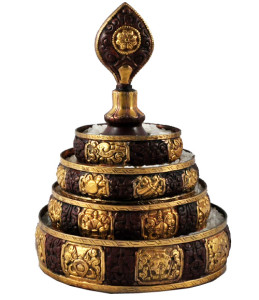
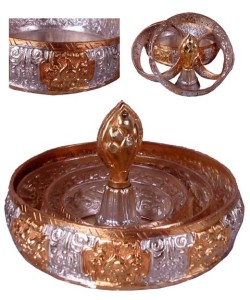
A mandala set (or Dultson Kyilkhor in Tibetan) is a tool used by Buddhists, Hindus, and Jainists in their offering ceremonies. The mandala set represents the mind and body of the Buddha, and can grant practitioners great power. The Sanskrit word mandala means “circle”. Mandala sets are often used in the mandala offering ritual. In this ritual, the practitioner offers the universe to the gods. In modern times, a mandala set is also used simply for decoration because of its exquisite aesthetic qualities. The mandala set is made up of several different parts. The center of the mandala is a tall pillar representative of Mount Meru, which is a sacred Eastern mountain considered to be the center of all universes. Mount Meru is reputed to be 672,000 miles high, and has inspired the construction of many temples. Many believe that the solar system revolves around the mountain, but its exact location remains to be found. Mount Meru is described as having four sides, with each side having a different color, lapis lazuli, ruby, gold or crystal. The symbolic Mount Meru of the mandala set is crowned with an ornamental top.

When one meditates upon a mandala set, they will utter prayers of sacrifice and offering. The practice is often begun by recitation of Vajrasattva’s hundred-syllable mantra while he wipes the base clean. Next, the practitioner might add a drop of water to the base, which symbolizes his compassion. Around the center post rests a set of three concentric circles, upon which offerings may be placed. The practitioner will place each ring while reciting corresponding prayers. One can visualize Mount Meru throughout their offering, or envision planet Earth as a veritable Mount Meru in the center of the universe. Each layer will then be filled with offerings. The offerings can be the same materials in each ring, or different for each one. Examples of common items offered are coins, beads, jewels, or rice. Others choose to offer more unique items, such as powdered flowers and herbs. It is suggested that one should offer items that the practitioner finds valuable, not what the recipient, or Buddha, finds valuable. The higher the value of the offerings, the higher degree of merit one will achieve. Also, the higher the quality of one’s visualizations during the meditation will bring about greater merit. Once the mandala set is filled, one may raise the entire piece over his or her head, symbolizing their willingness to sacrifice the entirety of existence in order to aid others in attaining enlightenment. Through this sacrifice, one will gain both wisdom and merit. At the end of practice, one should visualize benevolent deities transforming into a white light and entering the soul of the practitioner. The simpler preliminary practice called the Dudjom Tersar Ngondro uses only a mandala pan, filled with similar offerings cited above. The mandala set can be used in other capacities as well. One may make an offering to a spiritual teacher as a request for guidance, to present a solemn vow, for tantric empowerment, or as a symbol of gratitude at the close of a teaching or ceremony. Alternatively, those seeking to make an offering but do not have a mandala set available can form the mandala hand mudra, which can be commonly seen amongst Buddhist monks. The mandala hand mudra is fashioned by loosely entwining ones fingers together, while keeping ones palms open and facing upwards.

Mandala sets can be made of various metals such as copper, brass, silver, gold or lesser quality materials. As with most other religious items, mandala sets may be embossed or engraved with Sanskrit or Tibetan mantras and symbols. Mandala sets often bear the markings of the eight auspicious symbols. The three rings signify the Three Jewels of Refuge, namely the Buddha, the Dharma and the Sangha. It is recommended that one have their mandala purified every month, or at the very least on an annual basis.

Mandala offering sets are a staple in the lives of Buddhist followers. Mandala sets provide an important preparation for daily meditation. Practitioners require mandala sets to help them balance the outer world with their inner mind. Especially used in conjunction with other meditative tools, the mandala set can grant the illusive virtues of wisdom and merit to devotees.

The Mandala Set, and other items of interest in Tibetan Buddhism, such as Tibetan Singing Bowls, are of interest to Sylvia Smelcer, who is the owner of websites offering these items. They can be found at http://www.hinkyimport.com/

Images from http://www.hinkyimport.com/

——————————————————————————————————–

I look forward to your thoughts and comments!

Be sure to Subscribe to this blog either by RSS or Email via the forms on the top right column of the page.

Mandala Monday – Light Abstract Mandalas by Atmara Rebecca Cloe

I thought this week I would share with you one of my mandala videos. The moving mandalas in this video were made from a series of  my abstract artwork called Light Abstracts. Enjoy!

——————————————————————————————————–

I look forward to your thoughts and comments!

Be sure to Subscribe to this blog either by RSS or Email via the forms on the top right column of the page.