by atmara | Dec 9, 2013 | Art, Mandala Monday, Mandalas, Music
As a lover of Early Music, I have been familiar with Hildegard of Bingen’s chants for many years, but I had no idea she (or anyone else in the western world) created mandalas in the Middle Ages. Not being a historian of art I assumed the form came from the east (Tibet, India) and was delighted to see this article about Monastic Mandalas. I’m also delighted that Lillain Sizemore was gracious enough to allow me to reprint her blog post here. Thank you Lillian, for allowing me to share this with my readers.
—————————————————————————————————————————

As a child, I often saw or felt ‘entities’ from other worlds. Many children report supersensory experiences and one such child was Hildegard von Bingen.
Hildegard of Bingen, (1098-1179) was born a tenth child to a German noble family. She was an influential and spiritual woman whose fierce devotion paved the way for future generations of women to succeed in fields from theology, to medicine, to music and art. At a very early age she claimed to experience supernatural visions of a powerful, transformative light, but she hid her prophetic abilities until much later in life. She was admitted into a convent at the age of eight, and was prepared for a life of hermetic devotion and meditation.

Although Hildegard was not formally educated, her desire to record her visions and messages into book form was undeterred. She relied on secretaries to help transcribe her ideas onto paper and was a prolific writer on topics of philosophy, herbal medicine, the natural world, and a noted composer of hauntingly beautiful chants.
Hildegard became a well-regarded authority and the Mother Superior of her convent. Around 1135, at age 42, she undertook a series of visionary symbolic paintings in unmistakable mandala-forms. While she did not make the illustrations herself, it is thought that she oversaw their production. These cosmic memories occur in myth and archtypes we readily recognize. The pictures were thought to be as strong or stronger than the words themselves. There is a gesltalt immediacy, what Hindu’s refer to as darshan, meaning the simultaneous act of seeing and being seen by a deity.

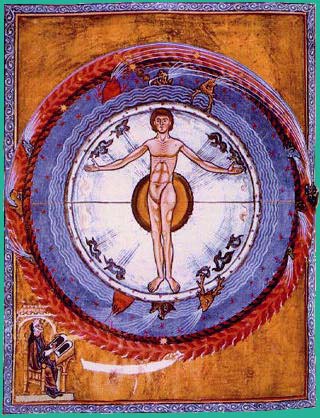
Universal Man. Manuscript illumination from
Liber divinorum operum or De operatione dei
(Book of Divine Works) by Hildegard of Bingen,
1163–74. Biblioteca Statale, Lucca
She created a drawing, or illumination, in her manuscript Scivias (Know the Ways), circa 1140–50, of her defining vision, in which the great span of the universe revealed itself to her in a trance as “round and shadowy…pointed at the top, like an egg…its outermost layer of a bright fire.”
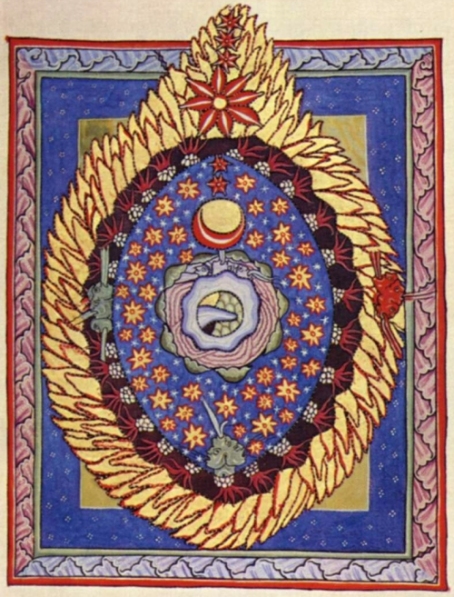
Das Weltall. Manuscript illumination from Scivias
(Know the Ways) by Hildegard of Bingen (Disibodenberg: 1151)
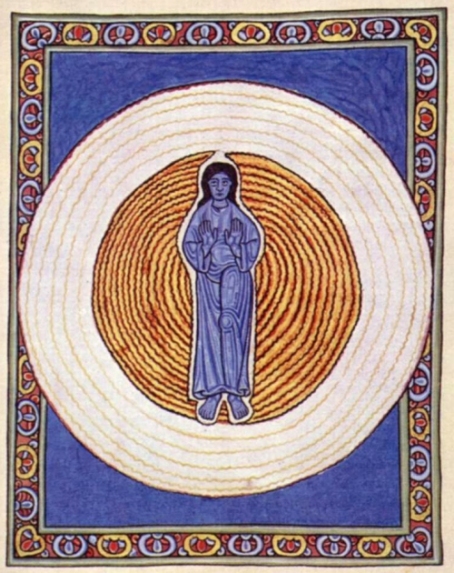
Die wahre Dreiheit in der wahren Einheit.
Manuscript illumination from Scivias (Know the Ways)
by Hildegard of Bingen (Disibodenberg: 1151)
Hildegard’s visions led her to channel cosmic laws into illuminations and illustrate invisible concepts such as ethers, air, and wind. She assigns meaning to these elements to represent such virtues as atonement, righteousness, and moderation.
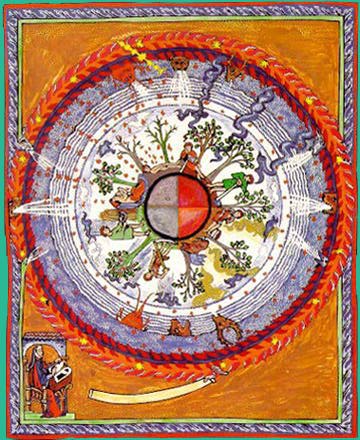
Cultivating the Cosmic Tree
Central to her mandala paintings is the understanding of a ‘cosmic equilibrium’ and a reverence for all life. In her use of ‘quartering of the circle’ we recognize the four elements (fire, air, water and earth), an archetypal depiction also used by Native American sand painters for the four sacred directions. Her concept of Viriditas, the Greening, was a precursor to our ecology movement. She described this power as the agent of the God, a divine vitality, that was the animating life-force within all creation. This ‘Greenness’ was the very expression of Divine Power on Earth.
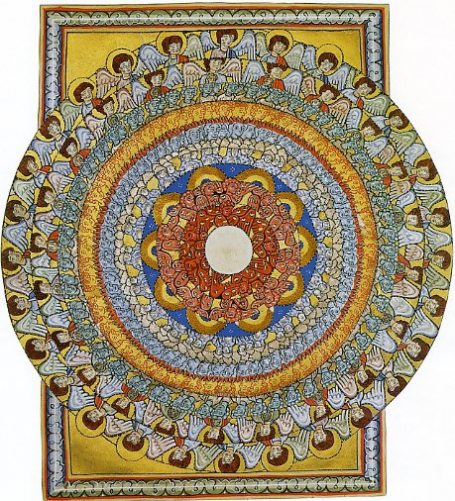
All Beings Celebrate Creation
As Stephanie Roth explains in her article The Cosmic Visions of Hildegard of Bingen:
Since this extraordinary phenomenon called life could only be created by God,
Hildegard believed, all that lives equally carried his Divine energy,
or ‘viritas’ [sic]. In her own words:
Oh fire of the Holy Spirit,
life of the life of every creature,
holy are you in giving life to forms…
Oh boldest path,
penetrating into all places,
in the heights, on earth,
and in every abyss,
you bring and bind all together
From you clouds flow, air flies,
Rocks have their humours,
Rivers spring forth from the waters
And earth wears her green vigour
O ignis Spiritus Paracliti
This is the foundation upon which all her texts rest, whether songs, visions or natural observations.
In a time when women were not allowed self-expression, Hildegard used art for very specific communicative purposes.Though she did not use traditional reasoning to arrive at her realizations, she presents us with subjective experience of the heart, through art, poetry, and music. Her work allows us to interpret and mold the ideas to our own personal experience and situation. This is not unlike the direct experience one can have with the illuminations in the recently published tome of C. G. Jung, the Red Book: Liber Novus.
There is a wealth of academic research available, and a growing curiosity and acceptance of her works. Perhaps now is the time for Hildegard’s fifteen minutes of fame? Just released, is a gorgeous, new German-language film “Vision” by Margarethe von Trotta.
Article © Lillian Sizemore, http://www.sfmosaic.wordpress.com
Bio:
Lillian Sizemore is a professional artist, educator, and independent scholar. She creates mandalas and observes pattern and geometry to connect to a deeper vibration of harmony and universal wholeness. Her mosaic work is featured in Mosaic Techniques and Traditions and Mosaic Art and Style. Lillian has traveled widely, documenting mosaic sites around the world. She authored A Guide to Mosaic Sites: San Francisco (http://www.sfmosaic.com/guidebook/index.php), a walker’s guide to publicly accessible mosaic sites, as well as many articles and book reviews. She is an invited artist-lecturer at the Getty Vila and on the faculty at the Institute of Mosaic Art.
http://www.sfmosaic.wordpress.com
http://www.sfmosaic.com
http://twitter.com/Musiva
———————————————————————————————————
I look forward to your thoughts and comments!
Be sure to Subscribe to this blog either by RSS or Email via the forms on the top right column of the page.
Like this:
Like Loading...
by atmara | Dec 2, 2013 | Art, Mandala Monday, Mandalas
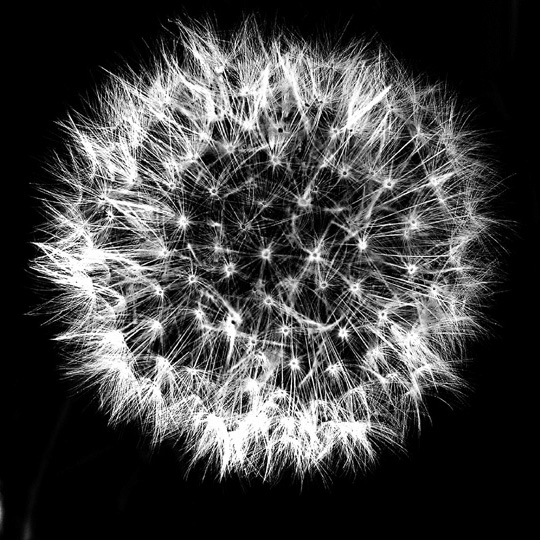
The next time you’re wandering around your garden, checking out your window boxes or taking your dog for a walk in the park, look around you – mandalas are everywhere. You just have to look around you to see the basic shape of a central point surrounded by an organized pattern radiating outwards. Sometimes just turning a flower or a pinecone around will reveal its mandala nature. You can draw inspiration from these natural designs, their shapes and their colours, in creating your own mandalas.
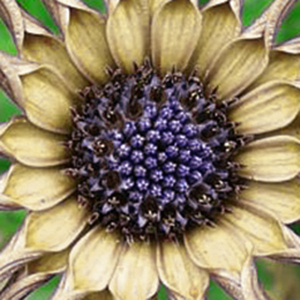
Mandala designs are easy to see in flowers. Petals surrounding a central core form the most natural designs. Imagine a sunflower, with its face full of sunflower seeds, surrounded by large, bright yellow petals. It’s a mandala guaranteed to make you smile. And something equally as cheerful – a daisy. Or perhaps a rose or a begonia for a mandala with overlapping petals.
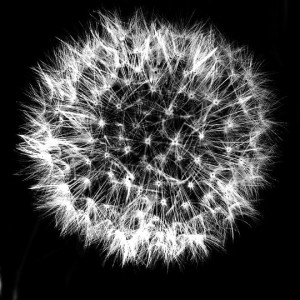
How about vegetables as geometric designs? Cut a tomato in half crosswise, and you’ll find a centre piece of the stem, with segments around it, each containing the seeds and juice. A cross-section of a bell pepper shows the veins and seeds, and the underside of a mushroom reveals the stem and the many lines of gills. Artichokes form one of my favorite designs. All of these are mandalas in nature.

And don’t forget about fruit as creative inspiration. You can see obvious mandalas when you cut citrus fruit in half. The segments of fruit surround a central stem and the seeds form additional decoration. Looking at a strawberry from the top down reveals a radiating pattern of seeds on a luscious bright red background.
Trees also contribute to the vast array of mandalas in nature. A cross-section of the trunk reveals the tree rings. But pinecones also have a beautiful symmetry when held upright.

It’s not difficult to find mandalas in the flora world, but what about animals? Are some constructed in a mandala structure?

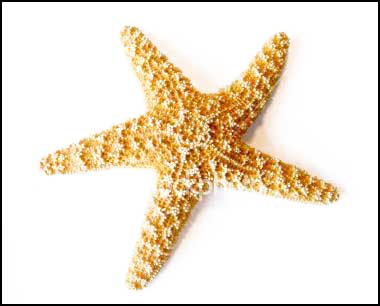
Starfish spring to mind. The 5 pointed arms around the body of the starfish form a simple pattern. And octopi and jellyfish can also seem to form similar patterns when viewed from above as they swim along. And sea anemones, and so on.
Mandalas are everywhere in nature, which may explain why they have been used as powerful and spiritual designs by humankind throughout thousands of years.
Searching for, and studying, mandalas in nature in your everyday life will have several amazing benefits:
* you’ll come to recognise the universality of the mandala
* you may be influenced in your colour choices in colouring mandalas by the ones you find in nature
* you may be inspired to create mandalas of your own based on those you see around you
* it’s exciting to find a new way to connect with nature
* you’ll appreciate even the smallest piece of the natural world when you’re looking for mandalas there.
By recognising and connecting to the mandalas in the natural world around you, you may begin to understand how many cultures consider the designs to represent universal truths.
Chris Lindsay is giving free rein to her creativity by designing mandalas for herself and others to color in. She uses geometric patterns from temari, yantra and kaleidoscope designs as the starting points for her creations. Whether you want to reduce stress, to quieten your mind, meditate or just to have fun, coloring is a great activity for all ages and all abilities.
Visit http://www.mandalas-to-color.com and set your artistic creativity free.
Upload your photos of the mandalas you have found in nature at http://www.mandalas-to-color.com/your-nature-mandalas.html
Article Source: http://EzineArticles.com/?expert=Chris_Lindsay
Like this:
Like Loading...