by atmara | Sep 23, 2013 | Art, Mandala Monday, Mandalas, Rumi, Spiritual Awakening
“Observe the wonders as they occur around you.
Don’t claim them. Feel the artistry moving through and be silent.”
~ Rumi
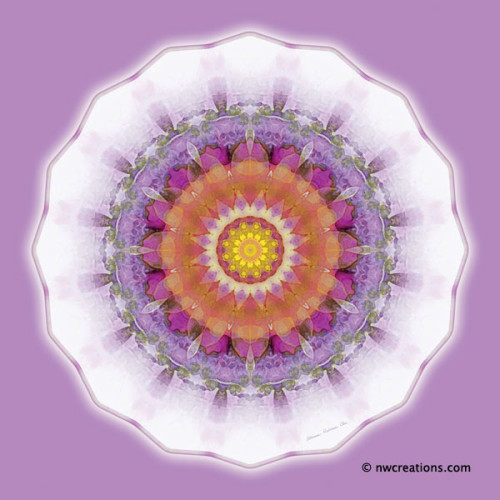
Mandalas for a New Earth, No. 1
——————————————————————————————————–
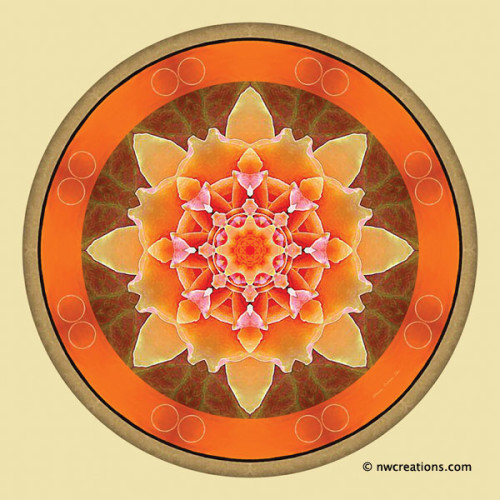
Mandalas for a New Earth, No. 2
——————————————————————————————————–
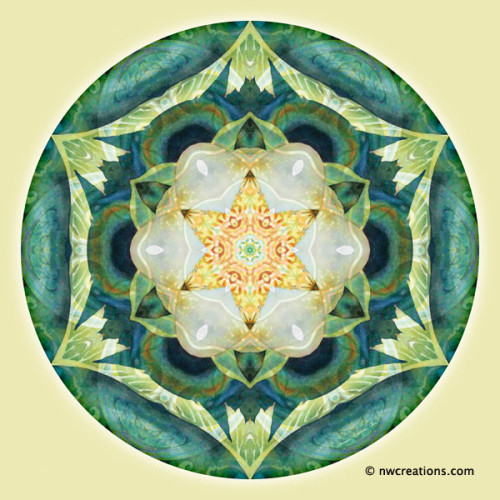
Mandalas for a New Earth, No. 3
Artwork © Atmara Rebecca Cloe
& New World Creations
——————————————————————————————————–
I look forward to your thoughts and comments!
Be sure to Subscribe to this blog either by RSS or Email via the forms on the top right column of the page.
Like this:
Like Loading...
by atmara | Sep 16, 2013 | Art, Mandala Monday, Mandalas
If you have ever wondered why every mandala that you see is round in shape, it is because the English word circle is translated from the Sanskrit word mandala. Although you may have been recently introduced to the term, it is certainly nothing new. In fact, the idea behind mandala was used in many religions, thousands of years ago, long before it began its rise in popularity in the Sanskrit world.
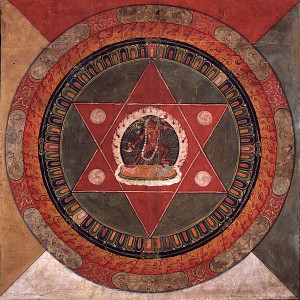
Painted 19th century Tibetan mandala of the Naropa tradition
The powerful circular form of the mandala is prevalent in Buddhist and Hindu religions. You will notice four gates in the shape of a T that extend from the center point in these pieces, showing the circle of unity. Vajrayana is a Tibetan branch of Buddhism that offer total enlightenment by creating their mandalas as sandpaintings. Of course, this is certainly not the only example of mandala used in religion.
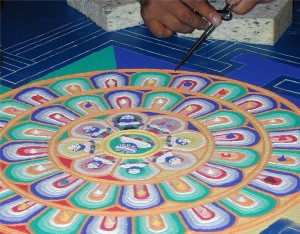
Tibetan monks making a temporary “Sand-Mandala”
in the City-Hall of Kitzbuehel in Austria.
The moji-mandala is a common form you will find in Nichiren Buddhism. It’s created as a wooden tablet or a hanging paper scroll. These not only hold inscriptions of Chinese characters but medieval Sanskrit as well to cover Buddha’s concepts, enlightenment and protective elements as well as other gods of Buddha. Nichiren religions worship this form of mandala, also referred to as Gohonzon.
Two and three-dimensional mandalas with geometric angles are used in meditation in Hindu rituals. Referred to as Yantras in this case, it is believed that the gods live within them. Therefore, each Yantras is unique to one god. Individuals who use Yantras for worship are able to seek the presence of these gods to ask for guidance.
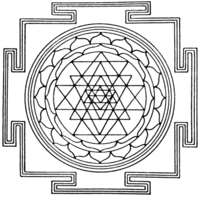 A diagramic drawing of the Sri Yantra, showing the outside square,
with four T shaped gates, and the central circle.
Those who practice the Christian religion may be familiar with mandala in the form of rosary, halos, Crown of Thorns, rosy cross, rose windows and Celtic crosses. These are all used by worshipers to feel closer to God.
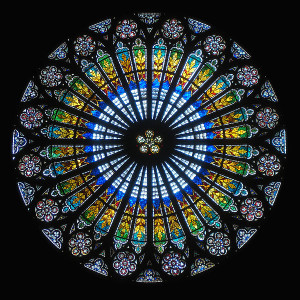 Interior of the rose at Strasbourg Cathedral.
For many centuries, the Bora Ring site has been used for initiation rituals by Australian natives. The girdle or circular belt worn by the acolytes is referred to as the Bora. Intricate stone arrangements such as Stonehenge offer a close relation to the mandala and Bora Ring. Creator-spirit Baiame is represented in ancient art and rock carvings as a mandalan figure.
You will find a collection of both inner and outer circles when viewing a mandala. These offer a different representation depending on which religious group is viewing the piece. Native-Americans have also used the mandala form in their culture. The inner mandala supports offerings pertaining to the body while the outer supports human senses.
You may or may not be familiar with labyrinths which are closely related to the mandala as they both take you on a circular journey toward the heart of the piece. Minotaur of ancient mythology was the inspiration behind the first labyrinth being built so that it could be held safely. The labyrinth’s center is viewed as being divine just as the mandala’s center offers enlightenment.

Labyrinth
The greatest of mandalas is the spiral or circle of life. Trusting in your beliefs will give you the truest meaning. These are the strong beliefs that send you on an inner journey as you observe and are surrounded by the outer world, just as the mandala began its journey in the Sanskrit world.
Article by Epouna
www.meaningofmandalas.com
Images from Wikimedia Commons
——————————————————————————————————–
I look forward to your thoughts and comments!
Be sure to Subscribe to this blog either by RSS or Email via the forms on the top right column of the page.
Like this:
Like Loading...
by atmara | Sep 9, 2013 | Art, Mandala Coloring, Mandala Monday, Mandalas, Meditation, Mindfullness
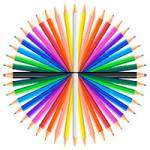
As you well know, not everyone (very few perhaps) can sit still long enough to achieve a meditative state. The longer you sit the more difficult it is to push passing thoughts out of your mind and maintain focus. Before you know it you are fretting over work, planning a dinner menu, or just giving up. Our action-oriented, multi-tasking, Western society simply doesn’t mesh with traditional Eastern
meditation techniques. This is where active meditation comes to the rescue.Active meditation, sometimes called moving meditation, is easier to learn, but just as powerful as the Eastern techniques you may be more familiar with. When practicing active meditation you will chose a simple movement, like coloring, drawing, or even walking, to give you stronger focus. The repetitive motions act as a constant reminder allowing you to easily shift your attention back to the meditation, back to the moment, before any fleeting thoughts take hold. Negative images, past regrets and future worries are simply pushed aside as you take the time to enjoy the present. When is the last time you’ve done that? Or, have you ever done that?In my book and in my workshops, I use coloring as the primary active meditation technique. After all, it’s easy, inexpensive, fun and allows you to open up your creative side, something that most adults rarely do. Below are basic step-by-step instructions on how to effectively meditate while coloring. If you are ready, grab your supplies and find a quiet space to enjoy this peaceful pastime.Step One: Start the session with a smile. Don’t skip this step just because it sounds a little silly. Holding a light smile on your face will help put you in a receptive mood for the meditation. In fact, studies have proven that smiling, even when you are not happy, can raise the level of endorphins (mood enhancing chemicals) in your
brain. So, start smiling!
Step Two: Flip through a coloring book and pick the first design that peaks your interest. There are a lot of beautiful adult coloring books available in bookstores and online. Some authors, myself included, offer free coloring pages on their websites.
Step Three: Choose your first pencil or marker and then begin to color. No need to over-think this, in fact I’m always amazed at the color combinations I come up with during a meditation and how wonderful they look together. I often find myself using colors I would normally ignore and then loving the end result. Whenever possible let the colors chose themselves.
Step Four: Watch the design take life with every stroke. Allow yourself to experience the movements, hear the sounds of the pencils on paper, or feel the markers as they glide across the page. As thoughts or pictures pop into your head (and they will) simply acknowledge them and then return your focus to the coloring. The coloring will always bring you back. With a little practice you will find it increasingly easy to get into a deeply relaxed, almost detached state.
Coloring is a peaceful pastime used by a variety of peoples, religions, and institutions to heal the mind and the body. To learn more about active meditation, explore the topic of color interpretation, or download a free mandala design, please visit my website at www.30minutemandalas.com.
Read more: http://www.articlesbase.com/meditation-articles/easy-meditation-through-active-coloring-meditation-206972.html#ixzz15SmhwIPn
Under Creative Commons License: Attribution
Michelle Normand – About the Author:
Michelle Normand is a graphic designer and author of 30-Minute Mandalas coloring book. She also works as a Mind-Body Fitness Specialist, teaching workshops on the subject in her new home in Dublin, Ohio. Michelle’s second book, 30-Minute Celtic Mandalas will be out later this winter. For more information about Michelle and the healing power of coloring therapy visit her website at http://www.30minutemandalas.com.
—————————————————————————————————————
I look forward to your thoughts and comments!
Be sure to Subscribe to this blog either by RSS or Email via the forms on the top right column of the page.
Like this:
Like Loading...